
Just as Carolina is the oldest public university in the country, Carolina Alumni (previously known as the UNC General Alumni Association) is the oldest independent alumni association, founded in 1843 by 31 UNC graduates, including Governor John Motley Morehead.
Despite its independence, the association keeps close ties to the University – including being headquartered on campus and its leadership being in regular contact with the chancellor.
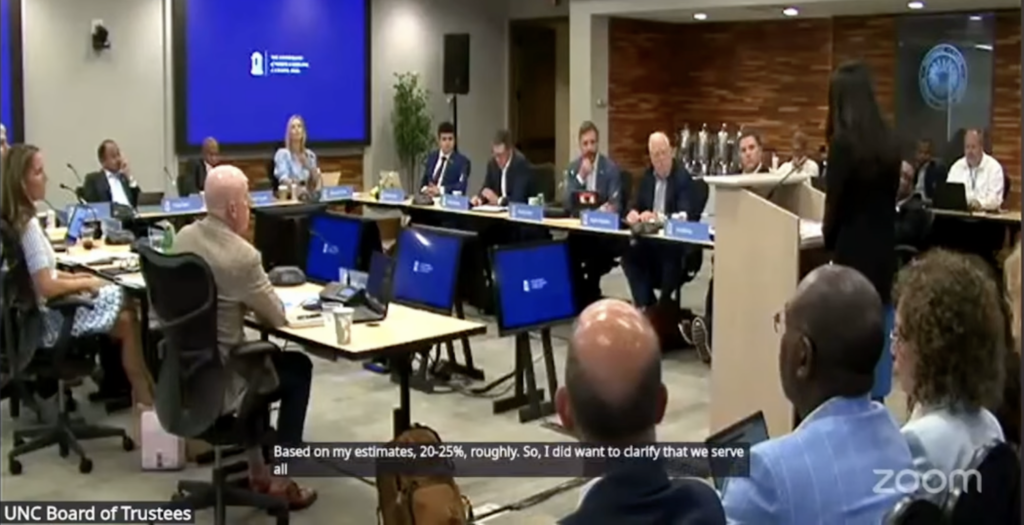
Carolina Alumni’s independence came under fire at a recent Board of Trustees meeting, with Chairman John Preyer likening the association to a “parasite.” Preyer’s comment was just one of many attacks Carolina Alumni’s President Veronica Flaspoehler encountered during her presentation to the Board.
Preyer channeled his ire at the association’s $120 million endowment. These funds come from alumni dues, as well as advertising and sponsorships from private industry in support of the association – namely in the Carolina Alumni Review, which the association publishes six times a year and mails to 64,000 alumni subscribers.
There is merit to $120 million being a hefty sum for an outside entity to be sitting on when the University could put those funds to good use. We at the Coalition for Carolina would suggest the association make an effort to pump more of those funds back into the University – especially at a time when the University is facing so many financial hardships at the hands of government officials.
That’s where our concerns end, though, and Preyer and other members of the Board of Trustees questioning the overall independence of the association raised alarm bells for us.
Through Carolina Alumni’s current independence from the University, the Alumni Review publishes independently as well, and that allows for a more unrestricted form of journalism that can best serve alumni readers.
The Review serves as the main communications vehicle for out-of-state alumni, and many of the talented journalists writing for the Review are graduates of the UNC Hussman School of Journalism and Media (which just won its 7th straight Hearst Journalism Award).
Without its independence, the Review would inevitably turn into a publication of puff pieces with the goal of avoiding controversy.
Trustee Perrin Jones suggested the Alumni Review magazine should prioritize an “alignment of message” with the University and that the content of the magazine should be more “neutral.”
Carolina Alumni President Flaspoehler confirmed the magazine is “neutral” and “fact-based” – but perhaps Flaspoehler’s definition of “neutral” is different than that of Jones and some of the other Trustees.
Even as an independent publication, we have already heard rumblings of interference and censorship at the Review. A story about the Campus Y in the May/June 2025 issue had to be nearly entirely rewritten due to heavy edits meant to restrict honest coverage so the piece wouldn’t come across as too activist.
At the Coalition for Carolina, we’ve had our own issues getting our ads approved when they criticized University leaders. We can only imagine the sort of restrictions that would be placed on content if the Review fell under the full authority of the University and the Board of Trustees.
While we want to be sure there is transparency into the operations of Carolina Alumni and that it is not unfairly siphoning funds away from the University itself, its independence from the University has its place. It’s a vehicle of open dialogue and accountability – and that’s something we should embrace.
We’re going to keep watching for signs of interference from the Board of Trustees on this matter. As alumni and friends of Carolina, we wanted to shine some light on the issue for you as well. Lux libertas.
We support you Veronica and Carolina Alumni. Thank you for all you do. I hope they see the value in CA and that it helps all Tar Heels.
The statement, “There is merit to $120 million being a hefty sum for an outside entity to be sitting on when the University could put those funds to good use,” implies that the Alumni Association has not been putting the funds to good use. I question that assertion, especially without any more information to back it up, and especially when this is an unsigned oped.